Beautiful Plants For Your Interior
Scatter remains of
A Thousand Years Old City of
Dvaravati Civilisation
Dvaravati, or as Greece called it ‘Chryse Chersonessos‘, derived from old Indian lore of Mahabharat, as one of the 7 cities belonged to Lord Krishna (Ayodhya, Mathura, Haridwar, Varanasi, Kanchipuram, Ujjain, and Dwarka).
Initially, a group of early bronze age civilisation settlements along the river surrounded by wild forests that further developed into
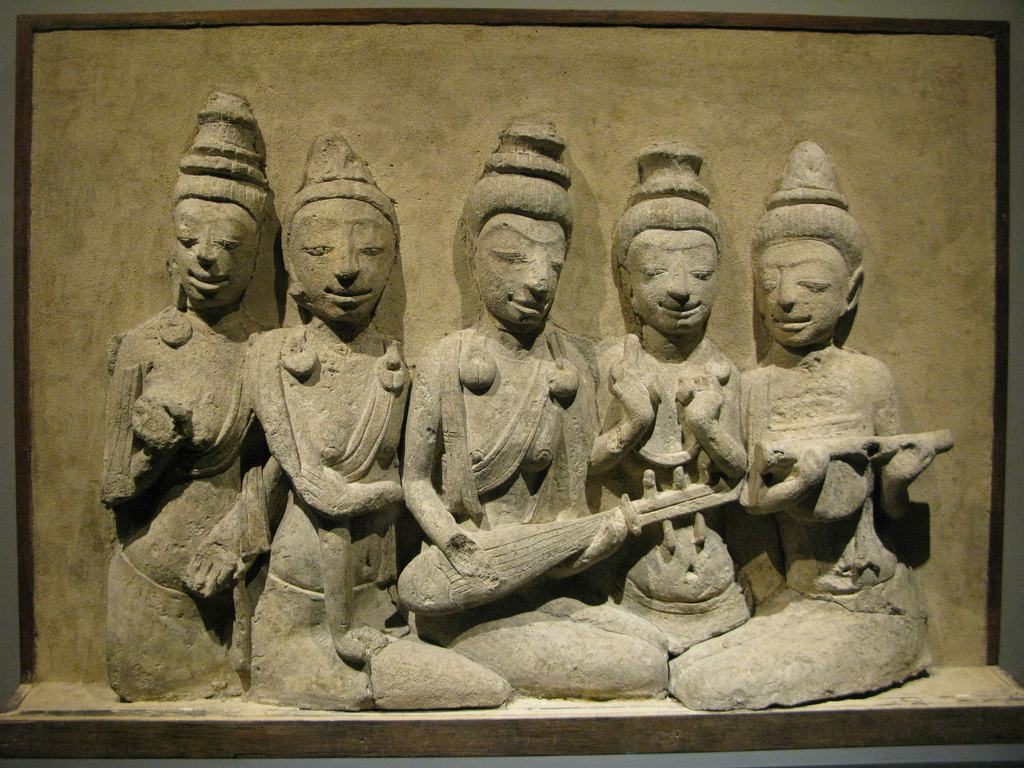
Dvaravati Civilisation, a conglomeration of independent Mon principalities located in Central and Northern Thailand with cultural links to further eastern city-states, flourished from the 6th to the late 11th century, with earliest archeological evidence suggested it a contemporaries of Kingdom of Funan (68 – 550 CE.) and Champa (192–1832 CE.). Nakhon Pathom was the wealthiest and most influential of all city-states; each the royal court functioned with Brahmin Priest, yet influenced by Dharma-Vijaya policies of Emperor Ashoke and the spread of Theravada Buddhism. As a result, Dvaravati became a loose cluster of Buddhism-based multicultural societies where numerous local dialects, folklore, and cultures can flourish.
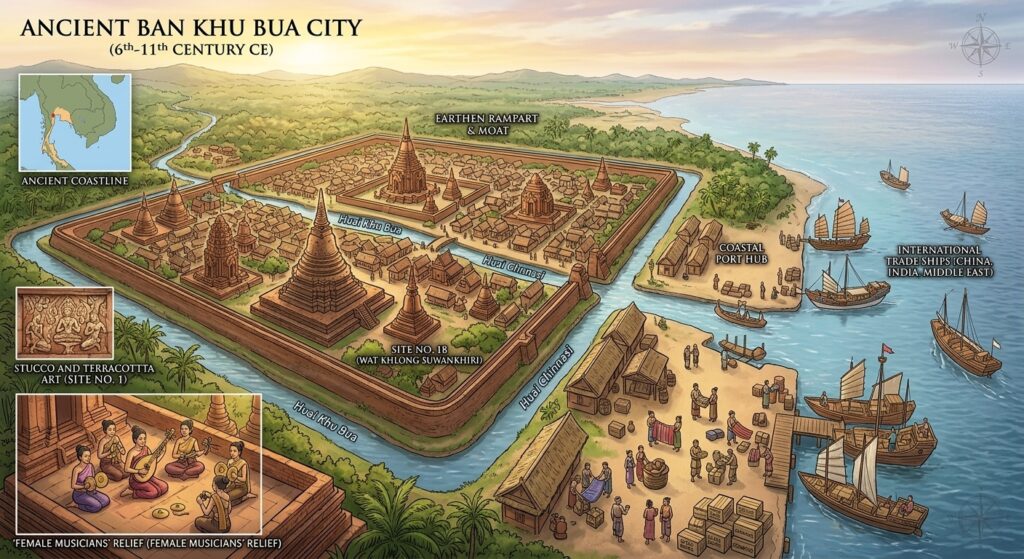
Ratchaburi – back then centralised in Kubua Maritime Port City – together with Petchaburi encompassed mountain, river, basin, lowland, and coastal plains are renowned for their development in art, culture, and history as evidenced by numerous important archeological sites. The archeological evidence indicates multiracial people of this region, including the Thai, the Chinese, the Lao Song, and the Karen.
The communities in this region were influenced by the expansion of the ancient Khmer civilisation; especially in Petchaburi River Basin where traces of ancient monument of Wat Kamphaenglaeng were discovered in Meung District.
During Ayutthaya and subsequent Thonburi – Rattanakosin periods, Ratchaburi was a major border town which fought in wars against Burma and a hub that linked Chao Phaya Basin Cities with Southern Coastal Cities. Merchant vessels occasionally laid anchor here before traveling further to the capital.
Old Port City
In the past, the area around the old market of Ratchaburi was a wild region with few dwelling
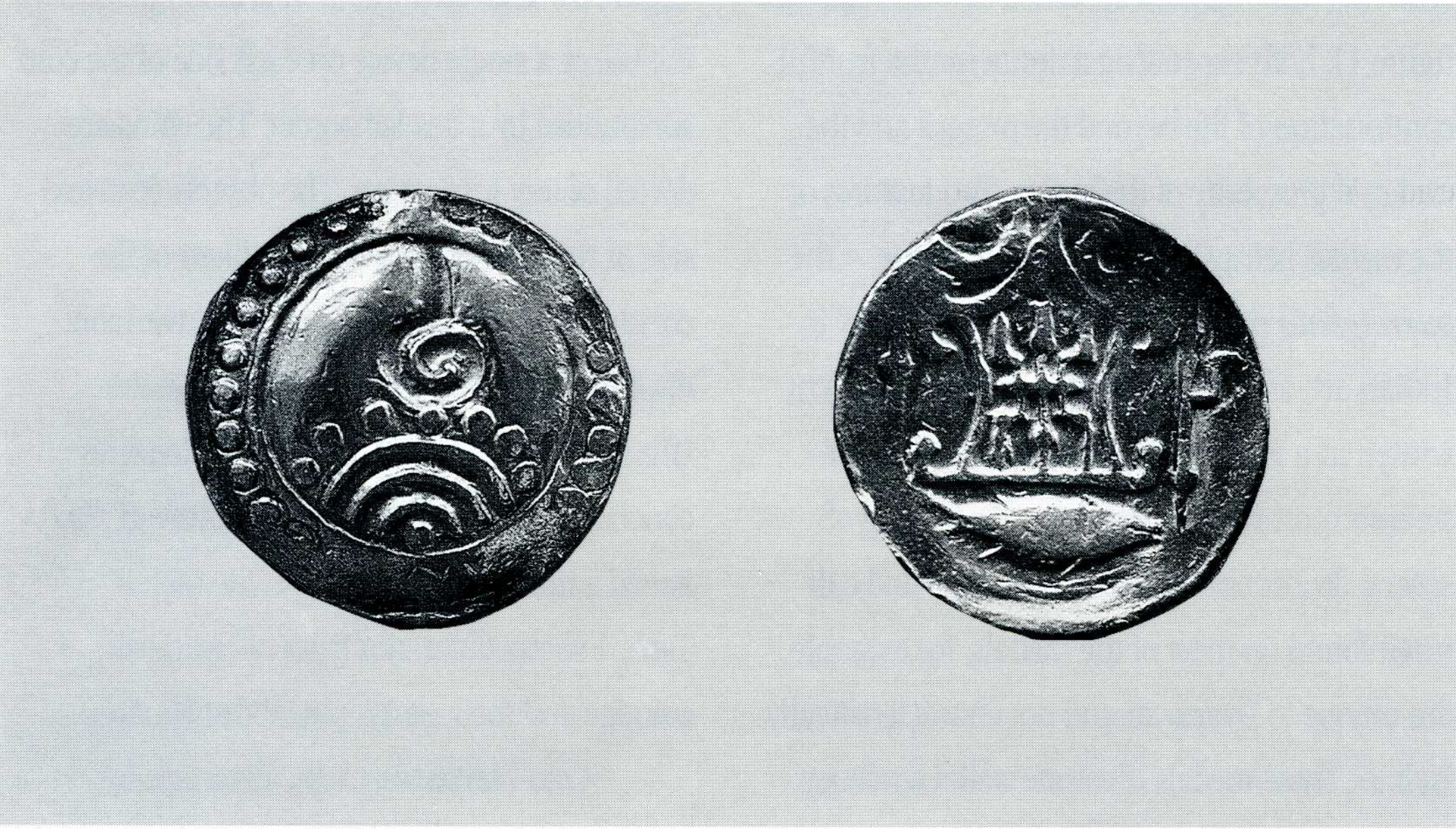
Dvaravati kingdom in Southeast Asian believed in animals had been culturally and traditionally inherited from India along trade-routes and proselytizing Brahmanism and Buddhism generally found in the sacred artworks like elephant, lion, cow, deer, fish, or hybrid, mythical creatures, for example Garuda, Naga, Narasingha, and Vanasphati. They were bear relevant to religions and divinities. Dvaravati societies were agricultural and mercantile society with devout beliefs in wealth, fortunes and fertility. They mostly embraced Buddhism. Animal figures were found in major cities aimed to decorate religious edifices symbolizing auspicious elements.

Undoubtedly we have no questions to ask which are unanswerable. We must trust the perfection of the creation so far, as to believe that whatever curiosity the order of things has awakened in our minds, the order of things can satisfy. Every man’s condition is a solution in hieroglyphic to those inquiries he would put.